

A little bit about Mainstream Publishing.

Art by Derek Kirk Kim

That art right there is by Derek Kirk Kim, from the new graphic short story collaboration between Derek and Gene Yang. It’s called The Eternal Smile, and it’s coming this Spring from First Second Books. I bet you want it, don’tcha? (Edit: It’s too nice not to see it in full size, click on the image for really big version.)

Gene Yang’s previous graphic novel, American Born Chinese, has far-and-away been First Second’s bestelling graphic novel, and has done extraordinarily well by any standard–having won awards, been recommended by schools and libraries, and it’s even done quite respectably in the bookstores.  I keep seeing it Offered Again in Diamond’s Previews Catalogue, I can only imagine that there are more than a few comic book stores selling copies as well. So, yeah, it’s successful.

Quite a few people were surprised to learn that American Born Chinese was not Gene Yang’s first graphic novel… I actually started following ABC during its initial online serialization because I was already a fan of Gene’s work. Two of his previous releases actually have a lot in common with American Born Chinese, in that they:

– Deal with Asian-American issues
– Address the concept of being an outsider, and the difficult nature of friendship
– Discuss religion in a fairly prominent way

Do you know what those books are? It’s okay if you don’t, most people that have read American Born Chinese have no idea about Gene’s previous graphic novels. Which is really interesting to me, as a reader and particularly a retailer.

Gene’s previous two graphic novels are Gordon Yamamoto and the King of Geeks, and its semi-sequel, Loyola Chin and The San Peligran Order.  Both of them are currently in print, and available from SLG Publishing. I actually recommend them both–they’re not as strong as ABC, but if you liked that one, I’d be surprised if you didn’t enjoy those two graphic novels.

So, let’s compare the covers of those two books with ABC:

gene_yang_cvrsAll three have lots of negative space. All three feature very passive characters on the cover. But one of them is clearly more visually interesting than the others, and it just looks, pardon the expression, more professional. That’s the one coming from the graphic novels arm of a multi-national publishing corporation, but yeah, which one of those three books would you rather pick up off the rack? I’d be curious to know whether Gene Yang created the cover to American Born Chinese entirely on his own, as I believe he did the earlier two graphic novels, or if there was any feedback, input, or design at his publisher First Second. I’d probably lay down money on the latter.

Now, obviously success is not as simple as a cover design, when it comes to why one book hits when another doesn’t… Actually, that’s not always true, I’ve read lots and lots about authors who feel that their books were done-in by poor covers, never really giving them a shot. In fact, one of the funniest contests I saw on the internet last year was a “redesign the covers of classic books” based on this very issue. Check it out, it’s quite good. But in this case anyway, I think it’s some pretty-amazing press and good word of mouth (and all of the work that went into getting that press and word of mouth from First Second) that accounted for ABC’s success.

Let’s put the design aside for a moment and talk about what’s in between the covers… ABC is a full colour book, longer than Gordon and Loyola put together, with higher over-all production (french-flaps!) and weighs is roughly the same price as either book. It’s also just a stronger work overall. Add in beautiful design and a great cover and a strong international marketing force, and you’ve got a hit on your hands. And it might be clear why Gene’s work really found an audience more than 10 years after he started putting it out there.

But here’s the question I really wanted to ask all along: Will all of the new readers that Yang has picked up from American Born Chinese go back and discover his earlier efforts? I think so, and I think First Second are counting on it too.

eternal_smileYou see, as I mentioned up top, Eternal Smile is actually a collection of short stories, and that gorgeous piece of art is from just one of them. The other two stories are somewhat under wraps, but I can confirm that one of them appears to be a much older collaboration between Gene Yang and Derek Kirk Kim, a story originally published by Image Comics almost 10 years ago called Duncan’s Kingdom. By way of confirmation, according to Canadian bookseller Indigo, the one-time title of The Eternal Smile was “Duncan’s Kingdom and Other Stories“, just check out the address bar when you get to that page. Duncan’s Kingdom was a two-issue mini-series written by Gene, and illustrated by Derek Kirk Kim in and around the time that Derek created some of the short stories that make up his Same Difference and Other Stories.

Now, just as an aside (though an incredibly important one): Duncan’s Kingdom is fantastic. It might be my favourite work from Gene or Derek, just because of how funny, well-illustrated, well-told, and ultimately gut-wrenching it is. I am entirely thrilled that this little-known story will be brought back to print, and I can’t wait to share it with people. It’s just that well-done. I even raved about it online somewhere, a long time ago, and it was maybe how Derek Kirk Kim and I met. So, yeah, I’m on board.

First Second is bringing Duncan’s Kingdom back into print, and hoping that Gene (and Derek) have enough of a fan-base to make it a success where, originally, the comic industry pretty much ignored it entirely. Sure, they’re hedging their bets by including (beautiful!) new work, but it’s essentially a reprint of a previously-published North American comic book, and I think it’s the first such work that First Second has offered (if you don’t count their repackaging of Little Vampire).

The reason this is fascinating to me (and if you’re still reading here, thanks, I realize this is way more rambly and navel-gazing than usual) is that conventional wisdom in the publishing industry states that, with very few exceptions each work only gets one kick at the can. No one wants to spend money publishing something that the industry considers “failed”. I’ve heard stories of editors and agents being incredibly prejudiced against anything that’s seen print in any form before. Some of those B&W experiment Image Comics in particularly. Hell, some of my friends in webcomics have had a lot of trouble with publishers on this front, which is totally baffling to me, but then a lot of people just don’t understand webcomics. But I digress.

I think it’s great that the graphic novel industry has matured to a point where we can actually repackage good material that’s been glossed over, books that were ahead of their time, or got poor distribution or promotion. That the industry can breathe new life into work that deserves it.

If, of course, The Eternal Smile succeeds. I don’t know how it couldn’t, given the pedigree of its creators and just how absolutely beautiful it is, but stranger things have happened.

Still, if I were SLG Publishing, I’d maybe be calling up Gene Luen Yang about putting together an omnibus collection of his first couple works, with a new title (and maybe no one picking their nose on the cover), hiring a colourist and maybe even getting Gene to do a brand new epilogue to the stories, for Spring 2010. Maybe they could even spring for French Flaps?

– Christopher
(This post came about because people on my Twitter voted for me to write something about “Bookstore Publishers”, because I wanted to see if anyone was reading my Twitter or not.)
More on Manga in 2009

Since I’ve been asked about–and have been thinking about–manga since my post on the state of the industry in 2009, I wanted to follow up here with some more of my thoughts… I realized that I kind of glossed over a few sections, like OEL as a specific example, and while I feel I covered it I didn’t really touch directly on it. (Short answer: OEL is a talent/property farm for pubs, only moreso in 2009).

Around the time I made my post here at 212, Deb Aoki at About.com:Manga made a similar post there, about the “10 Major Manga Trends for 2009” and “5 Burning Questions” for the same year. Deb did a great job poking her head into the areas I stood back from, so I figured the easiest way to offer my thoughts would be just to respond to hers, point by point. Obviously I’m not going to reprint her post here, so I invite you to open it up in a new window and read along, her thoughts and then mine. It’s almost like we’re having a conversation except it’s the internet, and it’s nothing like a conversation at all. 

Actually, my darling husband just came in the room and when I told him what I was doing, he remarked “That’s very… adversarial. Just so you know.” And I do, kinda, but that’s not my intent. I really enjoyed Deb’s piece for having a different point of view to my own, and wanted to send people that way and acknowledge where I got my inspiration. Hope that helps put this in context a little.

Alright, ready?

1. Manga Publishers Feel Your Pain

I think that the greatest skill that the current generation of manga and anime fandom could learn is empathy. I try to avoid generalising (I really do), but the one thing I’d like to see out of the discourse on manga and anime is for all areas of the industry to offer empathy, and the benefit of the doubt, elsewhere.

2008 was a hard year for manga fans, seeing their favourite series “suspended” mid-run, not knowing whether they would continue, let alone when. It’s hard when a series you like gets cancelled suspended, but it’s hard when staff at publishing companies are laid off, when bookstores close, when Japanese publishers just behave really friggin’ wierdly and cut you off for no apparent reason. I like that Deb laid it out directly, “bookstores ordering less means that publishers can only produce the best-selling books, and they aren’t kidding about this, because look: publishers went under this year”. Good stuff there. The only thing I’d maybe toss in a disagreement about is that the economic slump specifically led to the problems at Borders and B&N–those guys have had their troubles for years.

Also, you don’t know the heartbreak of series cancellation until you have to explain to a 7 year old girl that there will be no more Yotsuba. Like I did today. It sucked.

2. Can Scanlations Go Legit?

I think it’s important to keep reminding certain segments of fandom that human beings make the manga and anime they steal, and their livelihoods (and ability to make more manga and anime) rest directly on the shoulders of the consumer. So, good on ya Deb.

My own thoughts on this? Well, like I said, I don’t see an all-in-one digital solution coming this year, and I’m not really a fan of Crunchyroll’s comics reading interface. I don’t have a huge problem with grey-market scans, but the torrent stuff for commercially available material should just be stomped out as hard as possible. I seriously cannot understand why manga pubs are worried about ‘alientating’ readers by coming down on piracy, when these people aren’t their customers anyhow. I’m not a marketting major though, maybe there’s a great reason to be espoused by an agry person on a messageboard. 

Beyond that, the majority of the market for the most popular anime and manga is the same market that, for the time being, has the least access to digitial cash and credit. Even if there was an iTunes for Naruto manga and Anime, I’d be skeptical of the 12-18 year-old-demographic’s ability to use it. And with advertising taking a huge beating in 2009 (although moreso print than digital, but still), I have doubts about the “give it away for free online, ad-supported model”.

My money is on “No.” in answer to this question, but I’d be happy to be wrong.

3. Gotta Get ’em All: More All-Ages Manga

I’m quite happy to see more kids manga in 2009. The Legend of Zelda and Pokemon were strong sellers for us this year, and it looks like there are more on the way. I focussed more on mature manga in my round-up, but if it’s handled correctly (and without incident…) I think that the availability, quality, and presence of all ages manga in 2009 could really open up the market even younger, which would be absolutely ideal. Do I think it’ll happen? Not this year. I predict a slow & steady build across all of the kids comics departments. Some strong recognition for Toon Books would certainly help, though I can’t help thinking that Francoise Mouly would absolutely hate every single manga for kids on the market today, and coming in 2009. 🙂

4. Manga Publishers Look to Europe, China for Comics

This is something I find particularly interesting, publishers licensing manga-friendly material from countries other than Japan or Korea. This should have been more of a 2008 story, but publishing cutbacks forced a delay in the rollout at Tokyopop. As for Fanfare/Ponent-Mon, they’ve been publishing non-Japanese “Nouvelle Manga” creators since their very first book, with Yukiko’s Spinach by Frenchman-in-Japan Frederic Boilet, so their acquisition of Ma Mamman (My Mommy) by Emile Bravo didn’t surprise me so much as it delighted me. 

One thing I’d like to address in terms of “European and Chinese Comics for Manga Customers” is the success of Marvel Comics’ partnership with French publisher Soleil. We’ve seen decent sales on Marvel’s English-language editions of Sky Doll, US War 1, and Samurai, thanks to lovely art, high production values, and decent-enough stories, particularly to an audience not normally known for picking up bande desinee. Perhaps manga readers can be as open-minded? Or perhaps instead manga readership has grown far and wide enough to accept work that, while not Japanese, is at least on par with their favourite material when it comes to both quality and production values, and produced in a familiar format. I have good feelings about this one.

5. Can Online Manga Show Publishers The Money?

No. 

6. Superhero Comics Try To Find Manga’s Secret Sauce

My friends Dave Roman and Raina Telgemeier are writing the “manga” version of the X-Men that’s coming this spring, and so I’d be naturally inclined to be gentle on this one anyway. But seriously? It sounds neat. I used to have a fun idea about doing something similar, an out-of-continuity X-Men comic set in a manga-esque School For Gifted Youngsters, featuring an assortment of X-Men, New Mutants, X-Force, etc. etc. etc., all teenagers. I wanted Takeshi Miyazawa to draw it. It woulda been awesome. That Dave and Raina get to do their version of that? Fantastic! Go for it! If you don’t, someone else will.

As for the larger trend, it’s not about trying to sell manga to superhero readers, or superheroes to manga readers. It’s about trying to extend a brand–a Trademark–into as many arenas as possible, to make people fans of the brand. Wolverine is a movie and a video game and a cartoon and a toy and a manga and he appears in like 11 comics each month. It has nothing at all to do with reading, it’s merchandising. Which isn’t to say that Dave and Raina and AnZu and whoever aren’t putting a bunch of work in, but at the day it’s servicing a trademark (Ellisism, ironically enough) and building a brand. As long as the folks involved are building their own brands while they’re doing it, that’s great! But it’s hardly revoloutionary.

Speaking of which:

7. English Language Manga Looks For Literary, TV Tie-Ins.

As I said up top, the OEL/World Manga Movement was a con game. It’s a talent and IP-farm for publishing companies. You know when you’re not building your brand, OEL creators? It’s when you’re building it and then giving it away to your publisher. Always make sure your contracts have reversion-rights folks, particularly when those rights might actually revert.

I kind of feel like OEL as an idea is pretty-much dead in the water, thankfully, and that talented graphic novelists inspired and influenced by manga can balance their time between doing graphic novel adaptations of existing work and their own ideas. And that someone will be willing to publish them.

8. Manga Movies, Part Deux

So far the majority of manga’s promotional muscle has come from TV syndicated anime, followed closely by the manga itself. It’s not hard to look at something like Dragonball and see that it was poorly conceived, and will soon be a poor movie. But Astro Boy looks pretty good, and heck, I actually liked Speed Racer a lot. Shows what I know about movies. I’m just gonna pass here.

9. Experimental, Avant-Garde, and Edgy Manga Resurfaces

I think it’s kind of strange that Deb specifically chose to focus on the Avant Garde in a year that had some of the best straight-ahead mature manga releases ever (Good-Bye, Red-Colored Elegy, Disappearance Diary, Solanin, Monster, Black Jack) and a 2009 that promises a year that is perhaps even stronger (Too many titles to list, but David Welsh has the right idea here). That said, I really did enjoy Yuichi Yokohama’s Travel and New Engineering, and Tokyo Zombie is a hoot. I’m so, so, so looking forward to Monstermen Buriko Lullabye, which we haven’t gotten into Canada yet (customs!), but it was a good year for outsider-art in manga form. 

I do think 2009 has a lot of potential, though AX seems to be the only announced outsider release of the year. I can’t imagine PictureBox will be resting on their laurels in ’09 after producing such strong stuff this year, and who knows what other pubs might have up their sleeves.

10. More Manga As Art Exhibits

I’m pretty stoked about this. I think manga has become enough of a cultural draw to warrant showing original art and producing exhibitions here. One of my favourite memories of San Diego 2008 was seeing the original Bleach pages on display at the Viz booth. I’m all for this trend, and I feel like it has a good chance at continuing (even beyond the exhibits listed in Deb Aoki’s article, which I remind you you should be reading along with.)

Oh! Time to click the NEXT button!

11. Burning Question: What’s Up With Kodansha America?

I addressed this in my own wrap-up, but honestly, I’d really like to know myself.

12. Burning Question: Will Anyone Get Cell Phone Manga Right?

I predict: Yes. Apple’s app-store has made it easy to produce and distribute content on their phone, and all cell phone manga really needed was a consistant popular platform with a decent screen and interface. That said, the economics of cell phone use in North America (in particular in Canada) are RIDICULOUS, more than double the costs of Japan, and it doesn’t matter whether or not the manga finally looks great and is distributed well, if the buy-in cost is $600. It’s the same thing I mentioned up top, trying to monetize Naruto–the majority of the fan base is economically barred from participating. 

Also? The Viz Shonen Jump manga display I saw in San Diego was pretty tight.

13. Burning Question: What’s Goin’ On With VIZ’s Original Manga Program?

Everything I’ve ever heard about it mentioned that it would be slow, and steady, winning the race with this one. I’m not surprised that there’s been no formal announcement yet, although I would imagine something dropping at NYCC or San Diego this year. With NYCC in a month, expect an interesting announcement or two (remember, last year was Stan Lee and ULTIMO stealing the spotlight for all announcements.)

14. Burning Question: Where For Art Though, Yotsuba?

Hey, don’t worry. Yotsuba lives on in the hearts of little girls everywhere. Crying themselves to sleep at night. You reading this ADV?

Seriously, last answer I got? Not financially prudent to publish manga for a little while, long and the short of it. They’ve no reason to let the license go, they know it’s a fan favourite and did decent sales, but they can’t do anything with it for a while. 

But it, like Azumanga Daioh before it, is a quality title and a strong license. It’ll be back some day. Just clap your hands and wish as hard as you can.

15. Burning Question: Will Light Novels Hit the Bestseller Lists? 

No.

Well… no. Not happening. The Melancholy of Haruhi Suzumiya has the best shot, it’s apparently well-written and enjoys huge popularity. I could see it cracking the top 100, maybe, but it’s really, really otaku-oriented. I can’t see how the property could have a wide appeal when it leans so heavily on otaku culture and tropes. But then how much Japanese anything makes any sort of mass-appeal, bestseller type lists? Isn’t part of the appeal of something like Suzumiya (dancing and all) its outsider nature? Part of what separates us, the true otaku, from the rest of the herd?

Am I wrong?

(“You’re not wrong, you’re just an asshole.”)

…and we’ve reached the end. Finally. The New WordPress is kind of annoying as it’s telling me I’ve written just-over 2300 words here, all in one go, after a long (long) day at the comic book store for new comic book day. Yikes. Maybe I should just spend all my time responding to stuff other people write on the internet? 😉

Thanks to Deb Aoki, whom I’m hoping is going to be a good sport about all of this. Go vote in About.com:Manga’s survey for the best Shonen and Shoujo manga of the year!

Best,

– Christopher

Chris’ Idiosyncratic Take On The Future of Manga

manga-at-the-bookstore.jpg

“What Is The Big Picture Future Of Translated Manga? … I’d love to see someone address the future for this kind of publishing in more direct fashion that didn’t seem like a snow job … I mean, I assume the future is at least different from the present, right?”
– Tom Spurgeon, ComicsReporter.com

I’ve been putting together the big picture of the manga industry in my head for a while now. Here’s what I’ve got. No specific malice is intended, and I wish the best for all publishers mentioned.

Facts:

– The book industry is in flux. Serious, serious flux.

– Because of this, orders from bookstores are coming in more conservatively; lower or zeroed-out in some cases, with more stock being put in past performers. Sales at the top remain consistent or improving, the midlist is being shaken out badly. What I mean by that is, if you don’t have a top title with a recognizable brand, you’re seeing attrition in your sales for the first time maybe since you started publishing, and the bigger your midlist, the greater the attrition.

– The manga industry does more business in the bookstore market than in the direct market. Often by a ratio of more than 10:1 in favour of bookstores.

Supposition:

– This puts pressure and emphasis on other channels to shore up sales, and it’s why pubs have been investing in everything from direct-sales and digital downloads to paying increased attention to the Direct Market (comic book stores). The book market isn’t done, it’s in flux, but it has become even more important to exploit titles in as many ways as possible… or significantly adjust expectations for performance. Or both. More on that later.

Fact:

– The Direct Market is all non-returnable sales, and Diamond pays out promptly and regularly, and this is of great import to small and medium publishers of all stripes, comics or otherwise.

My Experience:

– Let’s talk about the DM for a moment. The Direct Market has never embraced manga. Manga has never really embraced the direct market. I officially think it never will, despite it being in the best interests of both to do so.

Example 1: The best-selling manga, and one of the best-selling graphic novels of the year, is the series Naruto. At The Beguiling, we received Naruto Volume 33 through non-Diamond channels 2 and a half weeks earlier than Diamond shipped it… The same time as mass-market book retailers. NARUTO is a major, proven title with strong sales that was available at major book retailers with better customer-visibility more than 2 weeks before comic shops had a shot at it. How can Viz and Diamond allow this to happen on, INARGUABLY, the most popular manga in the world? How can a Direct Market store participate in this sytem?

Example 2: I only received 10% of my order for NAOKI URASAWA’S MONSTER VOLUME 17 on the week it shipped from Diamond (which, again, was weeks after we’d received it elsewhere). MONSTER is, by all accounts, is exactly the sort of manga title that is made for direct market comic book stores: MONSTER is an action thriller with a great hook, solid art, and a wide appeal to non-manga-readers. We got 1 out of every 10 copies we ordered. No explanation from Diamond. The other 90% of the copies ended up shipping the same week as MONSTER VOLUME 18, two months later (and, again, after we’d received vol. 18 through other channels).

– So in the last two months Comic Book Stores have been fucked-over on a) Viz’s #1 manga overall, and b) Viz’s #1 manga for comic book stores. But it gets better.

Example 3: Why did the Comic Book Shop Exclusive version of Osamu Tezuka’s BLACK JACK Volume 2 ship two weeks after the mass market paperback through Diamond? Vertical and Diamond cut a special deal to specifically target and “enfranchise” direct market comic book shops, by offering them a limited edition of Vertical’s most important release of 2008. A limited edition hardcover with an extra story, available only through comic book stores, and promoted very well too! I’m not a fan of the move from a consumer standpoint–I think adding exclusive and desirable content in a considerably more expensive package is a bad practice, disenfranchising the consumer. But the book is inarguably excellent, and the bonus material pretty essential, overall. So I got on board with it, and promoted the first hardcover release and the series. So what happened? Diamond and Vertical shipped the second, comic-shop exclusive hardcover edition of BLACK JACK two weeks late with no notice, warning, or explanation, hurting our sales on the book and causing consumer confusion on a limited edition, high-end item.

Supposition:

– I am not convinced that things will ever get better in the Direct Market, for manga. I feel that Diamond Comics’ near-monopoly is the only thing it has going for it, and when the product is available elsewhere they just can’t compete as distributors. When they do have an exclusive–a monopoly–on an item, look at the haphazard way in which that item is handled! Ultimately, faith by publishers in the direct market is often misplaced.

– That said, I think that faith in the direct market by publishers is absolutely necessary, and it’s going to take publishers and smart retailers demanding both change and accountability in the system for it to pay off. It is important specifically because:

– I predict seeing more deals like the Previews-Exclusive versions of Black Jack, because often, those deals come with either cash (Vertical could use cash) or a guaranteed print run, something like “Diamond will buy all 1,500 limited copies of Black Jack up-front, which guarantees 1,500 copies sold up-front,” which dramatically subsidizes the print runs of smaller or medium-sized publishers. Tokyopop could use some of that right now, something along the lines of the recent Battle Royale or Warcraft omnibus volumes, although more smartly conceived. There’s tons of manga material on the market right now from many different publishers that has more to do with a direct-market comic shop clientelle than it does with the mass-market, and it makes sense to try and use these series to drive readers from the ailing bookstore market into the DM. Strike while the iron is hot, that sort of thing.

– Actually, just thinking about it, Dark Horse has the greatest incentive to do something along those lines, as their manga sales through the direct market are considerably stronger (percentage-wise) than outside it. Not to be a dick about it, but as a market leader DC has shown little-to-no leadership or vision when it comes to their manga line, CMX, and that’s a real shame too. For example, if I could publish one thing at Dark Horse, I’d do a special-edition bind-up of the first three volumes of Astro Boy, regular comic-size, in hardcover, to tie into the upcoming release of PLUTO from Viz. Those Astro Boy books contain the origin, some of the best early stories, and the complete WORLD’S STRONGEST ROBOT arc. 650 pages, nice format, throw in an essay by Frederik Schodt, and slap a decent price tag on it.  Comic Shop Exclusive. Easy money.

– But I think almost any publisher outside of the top 4 would be foolish not to leap at the chance of a Previews Exclusive, because cash or guaranteed print runs and the resulting press and buzz in the fan-community are nothing to sneeze at in these troubled times, particularly on work with a higher price point.

Facts:

– Speaking of work with a higher price point, Drawn & Quarterly has really paved the way for art manga in North America with their high-quality reproductions of material by Yoshihiro Tatsumi over the past 3-4 years. Most manga fans would lose their shit if a new 200ish page release had a $19.95 or $24.95 price-point, but any serious graphic novel buyer considers that a reasonable price point, and even when you take the disparity of print runs and the cost of translation and licensing into account, it’s hard to imagine those books aren’t profitable.

Supposition:

– It’s entirely possible to successfully publish good manga in North America, if everyone involved reconsiders their point of view on what successful means. The art-comix model espoused by D&Q–good books, released less frequently with lots of fanfare and a 10-cent per page price point rather than less than half that… for some releases. I don’t think anyone should expect Naruto-level sales, or even the sales levels that midlist titles hit a few years back, but if buy-in quantities are going to be capped by bookstores because they want to limit their exposure, doesn’t it make a kind of sense to make sure the price-point is higher on each of those units? At least when the material is intended for anyone outside of the mainstream shonen/shoujo demographic.

Experiences:

– The market could not absorb the number of releases that were crammed into it  over the last few years, and that’s even before the ‘economic crisis’. Tom Flynn from ICv2 calls me up every once in a while and asks me about how things are going with the manga, and I answer him. He’s particularly interested in yaoi, it’s a section that we stock both wide and deep, and have had some real success with. I haven’t really had a chance to talk to him very much for the past 4 or 5 months, but where once my answers were along the lines of “selling well” and “no, there aren’t too many releases to keep track of” and “sales remain consistent” my answers recently might have been “I am completely swamped with this stuff, and releases are outstripping sales.” I think that’s the manga industry in miniature; a successful niche market with strong potential that was simply outstripped by the number of people wanting a piece of it, and dumping material into the category. DMP should take a lot of the blame for this, with 8-10 yaoi releases almost every month, almost all of which are dropped into the market with little-to-no-fanfare. At least pubs doing 8-10 books per year have a 30 day dedicated promotion cycle. I feel like DMP is relying on the niche market’s pre-existing familiarity with individual titles/authors through the scanlation circuit, which is just weird. (But then, DMP have also been aggressively promoting their online sales/digital manga initiative in 2008, trying to bypass all markets and go straight to the consumer, so maybe they’ve learned a lesson after all?) But DMP’s sin isn’t even close to unique, like I said, it’s the manga industry in miniature. What DMP’s done in Yaoi, releasing dozens of books into a category that couldn’t support them is just magnified for the industry as a whole, with hundreds and hundreds of volumes of manga released by a dozen publishers with no support, no promotion, no audience, and it’s no wonder that bookstores, comic stores, and consumers are a little shy.

– At least there were fewer series dropped entirely in the middle of their serializations this year. Unless all of that stuff that’s being “reorganized” by Tokyopop ends up cancelled for good. Or, uh, ADV.  Or DramaQueen. Or… Nevermind.

Closing Thoughts and Predictions for the Year Ahead:

I think the market can support mature work at a different price-point, and we’ll see more of that from many publishers. As long as that market doesn’t become flooded (more than, say, 30 releases per year across all publishers) I think it’ll be a strong category for the next few years.

– The market will publish fewer series and fewer volumes, and attempt to put more ‘oomph’ behind each series they launch.

– The top licenses and series will remain mostly unchanged, as will their sales levels.

– The market will continue to experiment with higher price-points, bind ups (multiple smaller volumes in one big volume), and higher end formats. The market will realize that there is a mass-market and a collector’s market (yes, even for manga) and begin to produce material for both.

– Smart publishers with comic shop friendly material will do more “Previews-Exclusive” books, to try and capture some of the money in that market.

– Diamond will announce new initiatives in making their manga services more competitive.

– Every major manga publisher will have a significant digital manga plan by the end of 2009.  This will involve free, subscription, or digital download-based programs. There will be no consistent format, design, or website, because everyone thinks that their way is best and there’s nothing to be gained by working with your competitors. Sorry consumers!

– We’ll lose at least two publishers this year. No specific inside knowledge, but the market can’t support the number of titles being produced, and not every pub can survive with lower sales. I don’t want to put any specific pub in the deadpool, that’s not cool, but I can’t see things continuing as they are for some of them.

– Kodansha will start their own publishing concern for manga this year! Unless Everything I Know Is Wrong. And hey, I wouldn’t be surprised if it is.

So what did I get wrong?

– Chris

Kanji Of The Year:Change

kanji_of_the_year_change 

Via a fun blog I`ve started following called Osaka Life comes word that the official Kanji Of The Year (according to the Japan Kanji Aptitude Testing Foundation) is as shown above, which means “Change”. It is intended to describe 2008, and was chosen thanks to its use by Barack Obama, the worldwide financial crisis, climate change, and more.

Seems about right. 

– Chris

Pictures For Sad Children / Hourly Comics

By Jon of Pictures For Sad Children 

Have you read Pictures For Sad Children? I don’t think I’ve ever mentioned it before… it’s not even on my sidebar, actually, which is a terrible oversight. It’s an expertly produced, visually minimalist and emotionally overwhelming comic strip that’s funny in a way that makes you reconsider your life. You can find it online at http://www.picturesforsadchildren.com/, and I recommend checking it out. It’s almost at the end of it’s current arc, but it is so good that I recommend you begin at the beginning and work your way through.

I was reminded to post about this because the author, John Campbell, has begun updating his “hourly comics” again for the month of January. Just like it sounds, John draws a two-panel comic strip once an hour, every hour that he’s awake, about what he’s been doing that hour. It’s on a 24 hour delay to allow space for scanning and etc. So far? Very good. It’s kind of like he took every half-assed “criticism” about how autobio comics are naval-gazing and boring and sad, and told those “critics” to go fuck themselves by showing how one person’s day can be fantastic, whether banal or exciting or angry or anxious or, most often, funny. Campbell is updating online at http://hourlycomic.com/.

I’ve rectified my mistake and added both to the sidebar. I hope you enjoy them as much as I do.

– Chris

Kondansha pulls all licenses from Tokyopop… Germany.

beck_germanAccording to news coming down the wire, Kodansha seems to have refused to “refresh” any of their licenses currently held by Tokypop in Germany. The news was apparently made in a mailing sent out by Tokyopop to their fans, and is effective as of December 31st, 2008. It will affect the German publication of series Beck, Cromartie High School, School Rumble, Perfect Girl, and Hell Girl, only one of which (Beck) is published by Tokyopop in North America.

I can’t find anything official on the story, but here’s what I’ve found online so far:

AnimeOnDvd forums
World Of Hentai Forums (German Language)
Manly Manga and More… (scroll down)

An admittedly bad translation notes that “Reasons for this sudden decision are unknown, but it says that it is not related to the cooperation between Kodansha and Tokyopop Germany has to do,” which implies to me that it has nothing to do with Tokyopop Germany, and everything to do with the parent company and their relationship to Kodansha.

Tokyopop and Kodansha have had a rocky relationship for years, reportedly being exacerbated by the launch of Del Rey’s manga imprint and Kodansha awarding top manga properties XXXholic, Tsubasa Resevoir Chronicle, and Negima to the new pub instead of to TP, leading to statements that Kodansha refused to license to TP any further. In recent years, Kodansha licenses had been showing up at TP again (including BECK), but many of Tokyopop’s biggest back-catalog titles are Kodansha licenses, and losing them would substantially reduce their catalog.

This is also interesting news for industry watchers like myself who have been wondering what was going to shake out from all of the rumours of Kodansha setting up their own manga publishing arm here in North America. I had been assured that it was going to happen, but 2008 came to a close and no official movement was made. Maybe it was just a licensing waiting game? Tokyopop has been playing their cards very, very close to their respective chests in the last few months since the company’s very public difficulties, I’m wondering if we’ll get any word on the status of Kodansha’s english licenses any time soon. At last public statement, and pardon me for being too lazy to find the link, TP did say that they still had the BECK license (amongst others) but that was many months ago now.

Maybe someone with a better relationship with TP’s Marco Pavia can find out something I can’t.

– Christopher

Fresh Coat Of Paint Being Applied

Hello folks!

I’m going to be upgrading my version of WordPress pretty significantly this evening, and will be debuting an all new site design at the same time. Things will likely be weird around here for a little while, but the new design and version have been tested pretty thoroughly, so it should go smoothly.

Thanks for your patience…!

– Chris

11 years and counting…

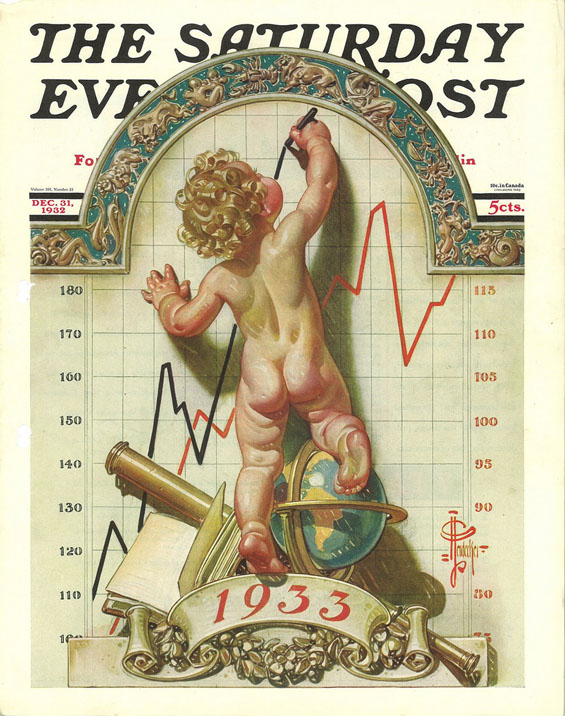
leyendecker_post.jpg

My first post at Comics212 went live in December of 1997 (I installed blogger a few years later), making this my 11th Anniversary of writing about comics. Thanks everyone for continuing to read, and I hope you enjoy the changes I have planned for the future. I hope 2009 is a more fortuitous year for all of us.

All the best,

– Christopher
Image by J.C. Leyendecker

Dave Lapp & Drop-In in The Star today…

lapp_post_header.jpg

You may remember me mentioning my friend Dave Lapp’s new graphic novel from Conundrum Press, Drop-In, a little while back when we did the signing. It looks like Dave got a nice little feature in today’s installment of The Toronto Star, which is pretty cool:

“Dave Lapp has drawn a graphic novel homage to the Regent Park art centre he’s worked in for 12 years. It says as much about him as it does about the centre and the kids who frequent it.

“Drop-In is defined by tension and anxiety, attained through assembling peculiar moments perched on a razor’s edge between awkward and actual danger.” Ian Marlow, Toronto Star

Congrats, Dave!

– Chris
Header image contains element from photo by VINCE TALOTTA/TORONTO STAR.