Hey there! I can now blog and photograph… on the go! So expect lots of little updates, and photos at Flickr.
http://flickr.com/photos/comics212/
Alright! I’m off tomorrow. Perhaps I’ll see you in San Diego.
– Chris

Never Safe For Work
Hey there! I can now blog and photograph… on the go! So expect lots of little updates, and photos at Flickr.
http://flickr.com/photos/comics212/
Alright! I’m off tomorrow. Perhaps I’ll see you in San Diego.
– Chris
 SAN DIEGO, CA: Thanks to their friends at Drawn + Quarterly, The Beguiling Books & Art will be exhibiting at booth #1529 at this week’s Comic Con International: San Diego, in its role as a sales representative for original art. D+Q’s generous donation of exhibition space will allow The Beguiling to present original art from dozens of talented cartoonists including brand-new, never-before offered-for-sale originals from SETH (Wimbledon Green), JASON (I Killed Adolf Hitler), PAUL POPE (Batman Year 100), and FAREL DALRYMPLE (Omega The Unknown).
The Beguiling represents original art sales for more than 40 cartoonists at its online store at Beguiling.com, but this small exhibition at San Diego will allow an unprecedented opportunity for art collectors and fans of these artists to see the original works up close. In addition to brand new works from Seth, Jason, Pope, and Dalrymple, The Beguiling will have work on hand from Drawn + Quarterly cartoonists including Miriam Katin (We Are On Our Own), Sammy Harkham (Crickets), Kevin Huizenga (Or Else, Curses), Jason Lutes (Berlin), Anders Nilsen (Big Questions), Michel Rabagliati (Paul Goes Fishing), Maurice Vellekoop (Vellevision) and dozens of other talented cartoonists.
For fans and collectors who will be in San Diego for the con and would like to save themselves the shipping charges on a piece of original art or two, drop a line to mail@beguiling.com with the title and artist of one of the thousands of pages from our online art store at Beguiling.com and we’ll bring it to the show for you!
Remember, that’s The Beguiling at the Drawn + Quarterly booth, #1529, near Comic Relief, Fantagraphics, Last Gasp, and Artists Alley on the “right†side of the exhibition hall.
ABOUT
The Beguiling is Canada’s premiere retailer of comics, graphic novels, and original comics art. Almost all of the original art that The Beguiling represents is consigned by the artists, ensuring we are able to offer the widest possible selection of material and that the artists get the largest possible chunk of the proceeds. Visit The Beguiling online at http://www.beguiling.com.
Artists with original art represented by The Beguiling include: Jessica Abel, Ho Che Anderson, Jeffrey Brown, Eddie Campbell, Geneviève Castrée, Scott Chantler, Becky Cloonan, Dave Cooper, Jordan Crane, Farel Dalrymple, Kim Deitch, Phoebe Gloeckner, Tomer Hanuka, Sammy Harkham, David Heatley, Paul Hornschemeier, Kevin Huizenga, Jason, Miriam Katin, Jeff Lemire, Jason Lutes, Matt Madden, Kagan McLeod, Anders Nilsen, Bryan Lee O’Malley, Paul Pope, Michel Rabagilati, Brian Ralph, Ron Rege, Graham Roumiey, Sean Scoffield, Seth, Jay Stephens, James Sturm, Maurice Vellekoop, and Steve Weissman.
The Beguiling is a sponsor of The Toronto Comic Arts Festival, May 9-10 2009. For more information visit http://www.torontocomics.com.
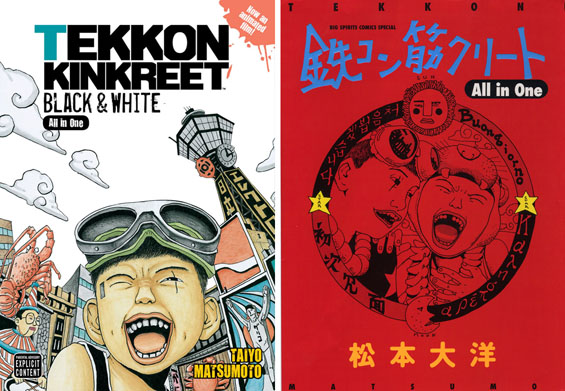
I was happy to read that Kazu Kibuishi really enjoyed Taiyo Matsumoto’s Tekkon Kinkreet, particularly since he says it was the interview I published that pushed him to finally pick the book up off his to-read pile. The piece he wrote on approaching Matsumoto’s work, and the book itself, is also really interesting. I’m aware that when you push a creator or a work really hard, people (particularly hardcore comics readers) tend to bristle. The number of comments in my feed reader in a given week that are some variation on living or not living up to the “hype” is kind of ridiculous… Anyway, Kazu lays his thought-processes on engaging the work bare, and like I said, it’s worth reading.
So this means that yes Jim, you have to read it again.
– Christopher
I’m terribly sorry to morally or ethically inconvenience anyone about this. But.Â
There are probably 20,000 service industry workers in San Diego that all appreciate your tip-dollars more-or-less equally.
There are two or three properties in San Diego where your drinking money goes into the pockets of a homophobe who is working against human rights, and using the money he is given from those properties to do so.
It’s a simple decision to make, but it is a decision. Anything else is honestly just rationalizing. I’m not going to be holding a placard outside your hotel room or anything, but there are probably 200 establishments for drinking and congregating within 15 minutes walk of the convention centre. Drinking at any of those probably won’t fund jackholes, and drinking or eating (or, unfortunately, staying) at The Hyatt will.
And you know, when the money goes into his account, I’d wager that the bank doesn’t keep a column next to it for whether it was spent by folks in favour of his actions, or critical of them. It’s all money.
So, your decision. This is the last I have to say on the matter.
– Chris
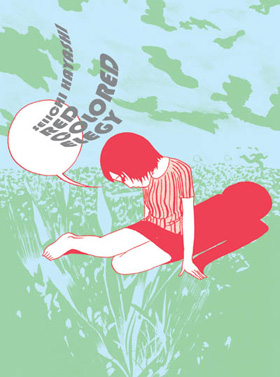 I haven’t linked to Adam Stephanides site Completely Futile for a while, but his recent post on D+Q’s manga initiative made me think, so I wanted to respond. Here, I’ll let Adam explain his problems with D+Q’s manga releases in his own words:
Drawn & Quarterly’s edition of Red Colored Elegy, a Japanese-language edition of which I reviewed here, is finally out. (Note that the D&Q book contains only the title story from the edition I reviewed, not the shorter stories that were also collected there.) Unfortunately, I can’t greet this occaion with unalloyed joy, because Drawn & Quarterly did the same thing that they did with their Yoshihiro Tatsumi collections: rearranging the panels on each page so that the page (and the book) reads left-to-right, but not flipping the original panels.* Why do they do this? If they aren’t going to publish it unflipped, which they should, I’d much prefer that they just flipped everything. That way the relationships between the panels, and the overall design of each double-page spread, would be preserved. I really don’t understand. Drawn & Quarterly is clearly publishing this as a labor of love, so why do they deliberately mutilate it? – Adam Stephanides, Completely Futile blog
I really enjoyed reading Red Colored Elegy in the D+Q edition, and if you enjoy a work that challenges you as a reader I’d recommended it. That said, I am bothered by the ideology of the D+Q release, of selectively flipping panels or cut-and-pasting pages. I even advocated against such back in the day, back when I heard the first Tatsumi Yoshihiro book The Push Man and other stories was on its way. But despite my problems with this method of formatting manga for North American release, as onerious as this production method is, a) it has the approval of the actual author of the work, and b) every other method for translating manga into English is potentially worse.
I don’t like flipped manga because mirror-imaging original art tends to reveal imperfections in drawing, that’s just the way it goes. It also makes manga-ka practically die of embarassment, seeing work with all of its flaws revealed to the world. I also think that, should someone like D+Q release a manga unflipped, the commercial possibilities of the work are practically halved. Any time a prominent blogger talks about a new manga release, Ed Brubaker (love ya Ed!) pops up in the comments to mention that he can’t read unflipped [backwards] manga. Just can’t read it. And he’s not alone… it’s one of the things that makes unflipped manga so attractive to younger readers by the way… it’s like visual pig-latin. So yeah, I mean, we get the Tatsumi books rearranged (“translated”) for Western audiences and the sales are great because the older, not-necessarily-manga-reading crowd that the books are aimed at can actually read them, and most importantly the original creator of the work is happy with it. Or, at the worst, he is at least happy enough (though having met Mr. Tatsumi, I can in fact confirm he is extremely proud of the D+Q editions of his work).
So, yeah, Adam, I really empathize with you on this one, because I’d love to read the work in a format as close to the original as possible. But I can’t, because I don’t read Japanese, and I’d rather the books come out and find a measure of success to ensure that more come down the pipe as well. And it’s not like D+Q doesn’t do a good job–they just don’t do the job we’d like them to do… a crucial difference.
On that note, Tom Devlin dropped in on Completely Futile to explain D+Q’s position:
Officially, we do this to reach as wide an audience as possible. We don’t view these books as specialty fiction but as stories that everyone should read. We realize that many people will view this as “mutilation” but we always run the English version past the artist before publication. In fact, Tatsumi actually rearranges the panels himself. I personally think of this approach to editing as somewhat similar to putting subtitles on a foreign film–it clearly alters the experience but it’s often the only way for many of us to experience the storytelling art of different cultures. – Tom Devlin, D+Q, on the Completely Futile blog
I think it’s just a matter of fingers crossed, waiting for the industry to change at this point. But it’ll be… shit, 10 years minimum before the readership base comfortable with reading unflipped manga is large enough to support niche or artcomix releases. Keep hope alive, Adam!
– Christopher
http://www.nbcsandiego.com/politics/16846195/detail.html
SAN DIEGO — A $125,000 donation in support of an anti-gay marriage initiative by a San Diego hotelier has drawn the ire of gay and lesbian activists and local labor unions who are now calling for a boycott.
Organizers held a news conference in front of the Manchester Grand Hyatt, near Seaport Village, on Thursday. A coalition of LGBT community leaders and the labor movement spoke out against Doug Manchester, who contributed a donation in support of Proposition 8, which would allow only men and women to marry in the state of California. The group opposes the ballot measure because it threatens the recent state Supreme Court decision that allows marriage between men and women.
I know it’s unlikely that anyone is canceling a hotel reservation for Comic Con at this late date, but if you wanted to take the time to tell the owner what an asshole he is on those handy comment cards they provide you, or perhaps in other more creative ways, well, I would support your decision.
For my part, the Hyatt can go fuck itself. I’ll be drinking elsewhere. I’d invite you to do the same.
– Christopher, via [JoeMyGod]
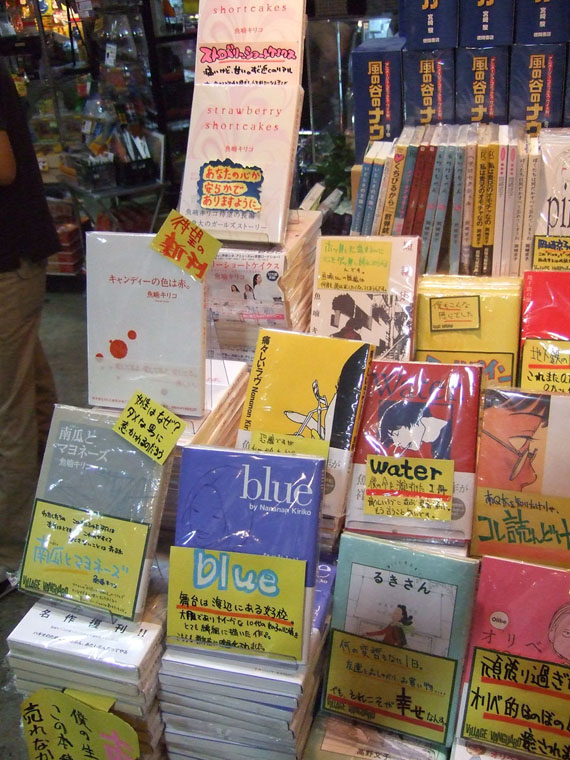 So just what do we want the manga industry to look like, anyway? I mentioned at the end of that last post that I let my own hopes and fears inform any predictions I might make… Prescribing the future of the industry, any industry is something of a sucker bet, something could happen tomorrow to send that industry wildly off course. Besides, predicting the future is best left to the people managing your retirement portfolio, I’d much rather describe what I would like to see, rather than what I think will happen.
In response to my last message, and probably to Kai-Ming Cha’s blog post from the floor of Anime Expo, David Welsh put up a really lovely, reasonable little essay about a mature manga industry, and the schedule upon which it will arrive. David makes the very salient point that manga, up until the Gekiga movement in the late 60s, really was considered a medium entirely for children. In that regard, Gekiga (as practiced by folks like Yoshihiro Tatsumi and Seiichi Hayashi) acted a lot like underground comics in did in the North American comics industry, giving both longtime readers and brand new folks a way into the medium that showed that it wasn’t all stories for children and teenagers… Granted we’re in the midst of a classic comics revival, with dozens of comic books, strips, and cartoons from the past being repackaged in such a way as to be reevaluated by an adult audience, but… yeah. It was nice having someone come along and shout “Hey, look what I can do with this medium! We don’t have to read adventure stories forever!”
Another thing I think that’s important to note is how many of what we consider mature or prestigious manga releases in a given year actually had their origins in work for children. The most shocking one to anyone who’s read it is probably The Drifting Classroom, by Kazuo Umezu. This story of a school full of 5-10 year old children that go on a “lord of the flies” themed adventure through time and space was actually intended for (and enjoyed by) children right around 10 years old. For a book that features shrink-wrapping, warning labels, and an 18+ rating, and that all of my friends and coworkers love, there’s a real disconnect there between the intended audience and the actual audience. Similarly, the high-end releases by Vertical of select bits of the Osamu Tezuka library take pains to remind us that there were readers of all ages coming into those stories, and they probably weren’t doing so because the books were $25 each in hardcover. You can see the early-adult and mature audiences for works by the D+Q and PictureBox crowd, not to mention the ultra-contemporary adult readership for works by PULP and Fanfare/Ponent-Mon alumni, but I don’t think it’s breaking any confidences to note that Tezuka’s Buddha is the most popular “mature” manga release in English in the last 10 years at least… and perhaps its intent as appealing to readers of all ages is at least partially responsible for that.
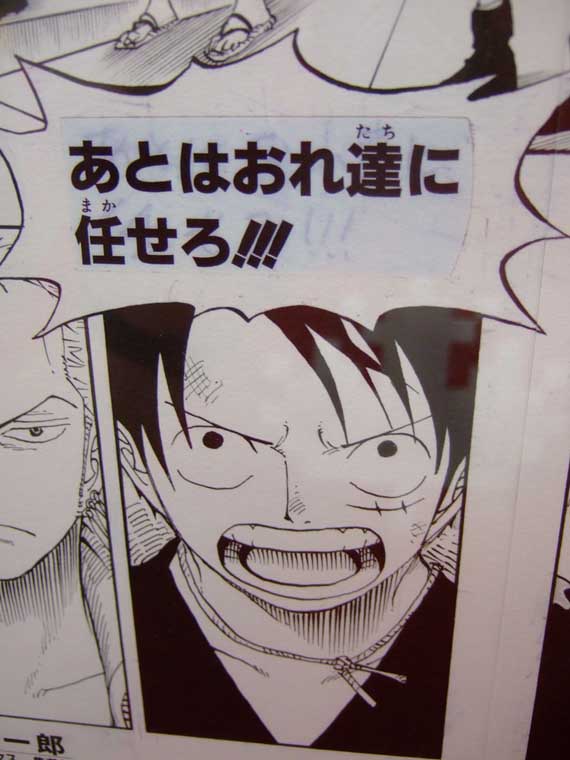 So what do I want the manga industry to look like then? I think that Drawn + Quarterly has a good idea, with one prestige-format (meaning a format with actual prestige, like a hardcover book with lovely thick paper and a beautiful design, and not those flimsy little 48 page superhero comics with a spine) release of “mature manga” per year. If there were 3 or 4 publishers doing that, each with a nicely designed manga release per season (spring/fall), that’d be maybe 8-10 wonderful books per year, which I think that the market could bear, and that’d be lovely. Currently the number of high-end manga releases in a given year is about half of that, which accounts for the loud noises I make when they manage to drop. Add in the serialization of older seinen and adult books from publishers like Vertical, Viz, and Tokyopop? I think I’d be okay with that.
Heidi MacDonald seems to think that someone is missing the point (I’m not sure who since she hasn’t linked me on this subject…), and that there’s a fundamental disconnect between the current generation of shojo and shonen manga fandom and a literary manga readership; it’s her contention that manga is more fashion than hardcore readers. Sort of how Harry Potter didn’t magic-up overwhelming book sales for the rest of the industry. I don’t entirely disagree, but reading her post on the subject I couldn’t help but think that she was selling the current generation of readers a little short. I don’t think it’s likely that fans of Bleach are going to turn into fans of Red Colored Elegy, but I do think there are middle-steps, a natural progression from Bleach to Vagabond, from Slam Dunk to Real, from Naruto to… well, grown-up Naruto I guess.
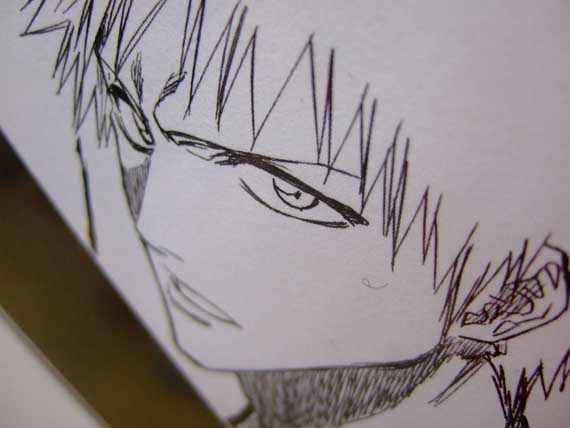
I think that… well I think that if we build it, they will come. If we build an industry with a proportionate diversity of material, of target audience, and we advertise the whole thing intelligently, we can build a market for older material, even for the literary stuff. Even if that number is 1%, or half a percentage point, of readers of shonen and shojo that go on to normal material, that’s great! That’s a hell of a lot more than we had last year, or the year before, or the year before. Anecdotally at the least, I can tell you about three amazing young customers at The Beguiling. All of them are 12-14 years old and have been shopping at the store (with their parents) for 3 or 4 years now. Over that time I’ve seen their tastes broaden considerably, and it’s kind of amazing to see someone go from Naruto to Naruto + Ruroni Kenshin to Naruto + Ruroni Kenshin + Buddha, to asking me about Dororo, Vagabond, Black Jack. But also work by creators like Seth and Chester Brown, Darwyn Cooke, Bryan O’Malley. They like what they like, but they see there’s other work out there that we at the store like, and wanna try it out. So we talk to parents and explain what they’re going to find in them and let them decide together if they’re cool with boobs or swears or bloody disembowelment. If you’ve got a store that believes in the material, and that keeps it in stock, not just makes it available for pre-order, then you can sell the material. In short, we have to invest in the industry we want, not just as retailers, but as journalists and pundits by covering the material we like, and as consumers by supporting the books we like with our dollars.
That’s my prescription for the manga industry: let’s make the industry we want, do our best to convert fashion into function, and celebrate our successes where we find them rather than complain that we’re not quite successful enough.
Next time: Tokyopop for reals.
– Christopher
Three pieces of art that I think are pretty great:
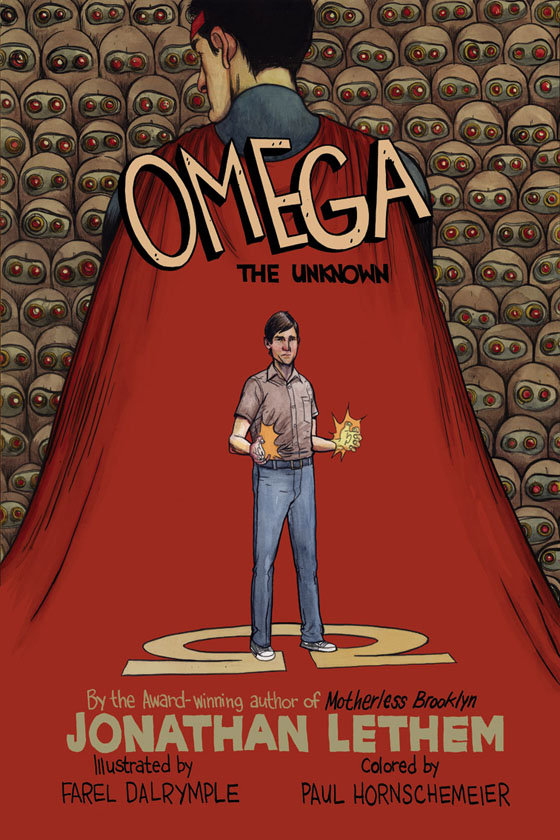
Marvel and Diamond released the final cover for the “premier” edition of the upcoming hardcover collection of Jonathan Lethem and Farel Dalrymple’s Omega The Unknown. This is one creepy cover, but I love it. Props to artist Farel Dalrymple and color artist Paul Hornschemier for turning out a Marvel book that looks nothing like a Marvel book–in the best possible way. The hardcover collection of Omega will be out September 10th and should retail for thirty bucks.

With the next installment of the Batman film franchise set to open in theatres this weekend, newspapers everywhere are commissioning Batman pieces. Here in Toronto, The National Post is no different offering up an article by Jeet Heer answering the eternal question, Is Batman Really Gay or What? Of course, no article on gay Batman is complete without an fantastic illustration by Mr. Chip Zdarsky, who also offers the rebuttal that Batman Totally Isn’t Gay. For a bigger version of this art, visit Mr. Zdarsky’s blog.
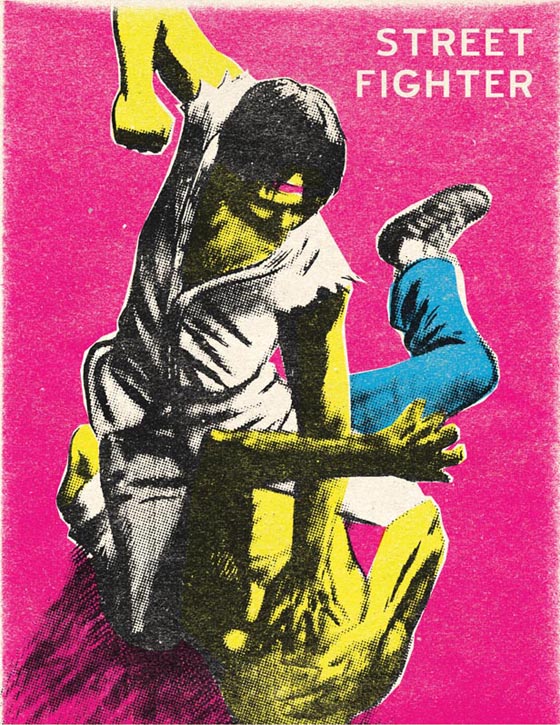
What you see there is Jim Rugg’s KICK-ASS art for the new Street Fighter: Tribute book that my friends at Udon are putting together. A limited edition hardcover of the book is dropping next week at The San Diego Comicon (and will be available from their website), and the softcover edition will see release this September in finer stores everywhere. When I was looking at the work that would be in this book, this illustration just totally, totally blew me away, as it’s a completely different interpretation of the comics/video games than we normally see, but just perfect, too. The rest of the book is pretty outstanding as well with lots of different artists contributing lots of different illustrations in lots of different styles–320 pages worth. Check out the Street Fighter Tribute Edition page for more info.
– Christopher
…and if you’re wondering who this Taiyo Matsumoto guy is, I wrote up a little bio/background post on him a while back. I also went back and tagged every post in which I wrote about him with his name, so check out the categories section on the right there. As for why I did all this, my excuse is that I am on vacation…
– Chris
In October of 1995, the online fan website “Tokyo Cool” published the first, and one of the only English-language interviews with manga creator Taiyo Matsumoto. At some point in the last 13 years the whole website was taken offline, interview included. With a little help from webarchive.org I dug up as much of the original website as was left, including this interview and some bibliographical information. I then spent the last few months re-writing it into slightly more grammatical English, annotating it, and filling out and updating the bibliography. Why? Because Matsumoto is a real talent and I figure the more people are interested in him, the more people will buy the work, the more work we’ll get…! Enjoy!
INTERVIEW: TAIYO MATSUMOTO
By Kansai Takita
Conducted October 1995
Translated into English by Kansai Takita
English re-write by Christopher Butcher
Since when have clever writing and bold art styling become so appreciated? TAIYO MATSUMOTO emerged like a penetrating black hole of negative space into a sandstorm of tiny details. The brilliance of intense pitch-black darkness—like a photo-negative of the sun—assaults our eyes. The entire spectrum of Matsumoto’s world is focused in this interview, a sum of words.
## The Beginning of Taiyo Matsumoto’s Manga Career
TAKITA: Have you been drawing manga since childhood?
MATSUMOTO: I have always enjoyed drawing manga, but I was more of a soccer player as a child. I started drawing manga seriously while in University. When I was at Wako University, I saw an illustration in the book that introduces various clubs at school, and then joined ‘Comic Study Group’. Up to that point, I was definitely a physical type. When I asked the other club members when we started practicing, I was told there was no such thing as practice! At that time, I had absolutely no knowledge of how to create comics—not even about toning. I had to be taught the basics, like not drawing on both sides of the paper.
TAKITA: You made your debut in Comic Morning Magazine [with the series STRAIGHT].
MATSUMOTO: There was a special edition of “Comic Morning†called “Afternoon†which was just being issued. It was in “Afternoon†where my first work appeared. I was a university student then.
TAKITA: Who were your favorite comic artists at the time?
MATSUMOTO: I was a fan of Comic Morning contributor Seiki Tsuchida, I decided to apply there with my work because of him. 1
## Taiyo Matsumoto’s Cousin, Santa Inoue
TAKITA: Did you start drawing comics at the same time as your cousin, manga artist Santa Inoue? 2
MATSUMOTO: Santa was born in France, and I used to bully him because his Japanese was terrible. I think it was into our late teens when we became close friends. He was very bright. He has been contributing his manga to Shueisha and other publishers since his early teens, he started very early. His style is not “tardy” and very sharp, you know. It may be because Santa was born in France that his comic has no “wabi-sabi” (an expression derived from the Sadoh, Japanese tea ceremony, implying simple tranquility). 3
TAKITA: Do you regard him as your rival?
MATSUMOTO: I do have a sense of friendly rivalry with him… I wouldn’t want to do anything unseemly.
## Moving from STRAIGHT to ZERO.
TAKITA: Next you moved onto the “Big Comic Spirits” magazine from “Comic Morning”.
MATSUMOTO: I had a lot of freedom working with “Big Comic Spirits.” I wrote my manga ZERO as I was asked to do a drama featuring a boxing story.
TAKITA: You made a dramatic change in your drawing style between STRAIGHT and ZERO.
MATSUMOTO: I was covering the Paris-Dakar Rally when I was 22. I had little interest in the Rally itself and spent a lot of time at bookstores. The drastic change in my drawing may have been the result of the comics I came across in the French bookstores. 4
TAKITA: Does that mean that you were influenced by French comics artists like Moebius and Enkil Bilal?
MATSUMOTO: Yes, I was. The number of really great comics artists in France were fewer than I had anticipated, but those who were great were exceptionally marvelous. They had a tremendous impact on my work.
TAKITA: Did you work out the story of ZERO before you began drawing it? Traditionally a boxing manga portrays the character growing up and coming of age, but that isn’t the case with ZERO.
MATSUMOTO: Yes, I had my story prepared. ZERO starts with a 30 year old boxing champion as the main character. At first, the publisher was against beginning the story that way.
TAKITA: In ZERO your line had changed, but the fundamental story resembles that of STRAIGHT.
MATSUMOTO: Yes, that’s true. With ZERO, I had completed what I could not accomplish in STRAIGHT. Although STRAIGHT was originally about a 40 year-old relief pitcher, I was asked to change him to a 19 year-old relief pitcher because I was young myself then. I had a specific desire to draw a story about a middle-aged man.
## Background on Matsumoto’s works BLUE SPRING and HANA-OTOKO (A Boy Meets A Papa and Baseball).
TAKITA: Your manga BLUE SPRING feels new, in the sense that it observes punk kids from an objective point of view, normally comics about punks are done by punk artists themselves. Was your high school like the one depicted in BLUE SPRING?
MATSUMOTO: Well, my high school has been closed down. The students really only became rough after it had been decided that the school was to be closed. I love drawing teenage punks, they became my dear friends and I was a fan of them. Although I felt that the story in BLUE SPRING “The Family Restaurant Is Our Paradise!†was pretty well done, I had written “This Is Bad†5 to complete the book. I was amazed by how I could rapidly change my work. I thought I had an unbiased attitude to my subjects, but I found it impossible to be impassive. At the end I was forcing myself to draw punks objectively and the consequence is “This Is Bad.â€
TAKITA: “Revolver” is based on an original story by Carib Marley (a writer and a great fan of Bob Marley!). How did you two collaborate on the work?
MATSUMOTO: He had finished the original story as one piece and kindly said that I could cook the material as I wished. I was a fan of Carib Marley, and it happened that we had the same editor. “Revolver†was the very first work I did based on someone else’s story.
TAKITA: Your manga HANA-OTOKO is set in Shonan, a seaside area.
MATSUMOTO: I used to live in Sagami-Ohno. But I had a feeling, while I was strolling through the Shonan area, it might just be the right environment for creating HANA-OTOKO, so I had moved to Fujisawa. It was pretty lonesome living by myself, so I asked Kazunari Eifuku 5a and Santa Inoue to move there with me.
TAKITA: HANA-OTOKO resembles Kei Nemoto’s manga NATURAL. 6
MATSUMOTO: I found out about that afterwards. Santa is a fan of Nemoto’s works and seems to be on good terms with Nemoto. I am a fan of Yoshikazu Ebisu’s 7 works, particularly TEACHERS IN HELL and NO MORE THINKING. I think they’re great manga.
## TEKKON KINKREET and Action Comics
TAKITA: You are particular about the movements of a human body. Do you like action comics?
MATSUMOTO: I like comics with action especially in a serialized comic. Specifically, I prefer to draw sports stories where the action can be depicted more naturally, as compared to something like a gangster action comic. Another reason I prefer to draw sports comics is that I enjoy drawing the little details that belong to sports, like a catcher’s mitt or the number on a player’s back in a baseball manga.
TAKITA: How about a soccer comic?
MATSUMOTO: Doing a soccer comic is hard. 22 players need to appear in one game. I would need 20 volumes to do a soccer comic, but I feel most comfortable with work that’s about three volumes long.
TAKITA: Did you pick the setting for TEKKON KINKREET as the near-future because you had action comics in mind for this particular work?
MATSUMOTO: It would have been more effective to see a boy running down a building wall in animation, I couldn’t achieve the effect I had envisioned in a single drawing. 8
TAKITA: Even though it’s a single drawing, your expression of movement is so rich. You use techniques like abbreviating dialogue and very specific framing and composition in TEKKON KINKREET, did you do that all on instinct?
MATSUMOTO: If I try to write all of the dialogue, the story would be too long. Even when I read other people’s comics, I’m inclined to skip some of lines of dialogue. So I abbreviate it as much as possible in my work.
##The Vector Of Creation
TAKITA: What are you interested in creating next?
MATSUMOTO: The next material that I am interested in is table tennis. I’d like to do a high school version of Shinsen Gumi in Ryotaro Shima’s “Burning Sword” (a historical novel where a group of samurai called Shinsen Gumi have risen to protect the Emperor toward the end of Edo Period). 9
TAKITA: There is already Monoru Furutani’s GO! INA JUNIOR HIGH TABLE TENNIS CLUB!
MATSUMOTO: Whenever I mention that I want to do a table tennis manga next, I’m always reminded of that. What I’m going to do is a story with a main character who is a genius. I’ve been researching and the series will appear serially in “Big Comic Spirits†magazine.
TAKITA: It may sound trite, but why have you chosen to become a comic artist and not a novelist or a film director?
MATSUMOTO: When I was deciding what I should do for life, there were so many comic artists that I had incredible respect for, like Minetaro Mochizuki 10, Seiki Tsuchida and Katsuhiro Otomo 11. Under the circumstances, I could think of no other way to tell stories than becoming a comic artist.
TAKITA: Mochizuki’s FLUTTER GOLDFISH is really funny.
MATSUMOTO: When I read that, I was relieved that I don’t have to draw women. Many people had said that my weak point was that I couldn’t draw women in the same way that, if I were a pitcher, I couldn’t throw a curve ball.
TAKITA: TEKKON KINKREET has become a play directed by Makoto Sato in a black tent. What do you think of the play? 12
MATSUMOTO: I had expected more changes from the original, but on the contrary, it was loyal to the original work and most of lines used were exactly the same as those in the actual comics. Having seen that play, I wanted to write a play myself.
## The Future
TAKITA: What do you think of multimedia, personal computers, and so forth?
MATSUMOTO: Currently, I am working on a CD-ROM 13. At first, I was asked to make a CD-ROM of TEKKON KINKREET, but I did not want the comic which was meant to be read as in two-page spreads to be conformed to a style where every panel had to be clicked and read one-at-a-time. So I am doing an original work for a CD-ROM. I still don’t have a feel for it, but I’m flattered that many young people have an interest in my work.
TAKITA: The art book 100 and manga NIHON NO KYODAI (Brotherhood of Japan) are your newest works. Could you tell us about your future plans?
MATSUMOTO: Manga creator Mr. Aihara 14 has already done a ninja comic. I’d like to do a ninja comic myself, using vivid contrast without toning, possibly in a monthly or bi-monthly serial. The world of ninja is so cruel and dirty, yet it has a strong aesthetic. When I am a little older with more drawing ability, I would like to draw that world of wabi-sabi. 15
##A message for the readers
TAKITA: Would you like to leave a message for the readers?
MATSUMOTO: Please do not believe in comic artists’ words. I think comics are like fake magic. To keep itself entertaining, it creates a secret device, and we are not creating comics out of supernatural power. Sometimes there are readers who have false idea about drawing comics are about using supernatural power. (^^;;)
TAKITA: Indeed, that may happen, as a manga leaves the hands of an artist once it is published and starts to walk by itself. Thank you for joining us today.
END
October,1995
INTERVIEWED by TAKITA KANSEI
The original interview may be available online by clicking this link.
—
END NOTES
1. Seiki Tsuchida has not yet been published in English. For more on him though, check out these links.
Links on Seiki Tsuchida:
A fun post on his series “KING OF EDITORSâ€: http://community.livejournal.com/mangacast/514236.html
Biography of Seiki Tsuchida: http://users.skynet.be/mangaguide/au1959.html.
2. Santa Inoue is best known in North America for his series TOKYO TRIBES, published in English by Tokyopop. A sensational Japanese gangster fantasy, the series has legions of dedicated fans in Japan, and has led to an anime, fashion lines, and many other licensed goods. Unfortunately it looks as though TT has been cancelled by the publisher, with only six of 11+ volumes translated. Santa Inoue is no relation to manga-ka Takehiko Inoue, author of VAGABOND.
Links on Santa Inoue:
Santastic! The official Santa Inoue store: http://www.santa.co.jp/
Tokyopop Publisher Stu Levy interviews Inoue in a video interview: http://youtube.com/watch?v=85XTK8kJUwA (Apparently this is just part 1 of an 8 part interview, but I can’t find parts 2-7 anywhere. Sigh. Tokyopop.)
3. This description of “wabi-sabi†comes from the original interview, however the actual idea is much more complex and nuanced. For more on “wabi-sabiâ€, visit http://en.wikipedia.org/wiki/Wabi-sabi.]
4. I feel it important to note that Matsumoto created the action tour-de-force NO.5 (Number 5) in the early 2000s, which has a very deliberate and acknowledged tip-of-the-hat to the comics of Moebius and Enki Bilal.
5. In the original Japanese version of BLUE SPRING, the story referred to here is called “Oh, I Give Upâ€, and is the last story in the book.
5a. Kazunari Eifuku: I couldn’t find any information on this person, save a thank-you credit in Usumaru (Short Cuts) Furuya’s SUICIDE CIRCLE. It is interesting to note however, that Matsumoto would later go on to work with a fellow named Issei Eifuku, and Issei Eifuku seems only to be credited with being the writer on Matsumoto’s newest work, TAKEMITSU ZAMURAI.
6. I can find no record of this manga anywhere. However, the artist that they seem to be referring to here is likely “Takashi Nemoto†who is sometimes mistakenly referred to as “Kei Nemoto.†Nemoto is a seminal, influential figure in underground comics in Japan. His first published work in English appeared in the now hard-to-find collection COMICS UNDERGROUND JAPAN, and his first major work, MONSTER MEN BUREIKO LULLABY, will be published in English by PictureBox Inc. in Fall 2008.
Links on Takashi Nemoto:
The official English Takashi Nemoto website: http://www011.upp.so-net.ne.jp/TOKUSYUMANGA/text/genre14.htm
Information page for PictureBox Inc.: http://www.pictureboxinc.com/product/id/306/
7. Ebisu Yoshikazu’s work is generally untranslated in North America, except for a short story in COMICS UNDERGROUND JAPAN. However, a panel of his work graces the front cover to Frederk L. Schodt’s seminal book on manga, Dreamland Japan, and an appreciation of the artist appears in that book.
8. Obviously, this interview was conducted far before TEKKON KINKREET was animated. The animated version of TEKKON KINKREET was released in 2007 by Sony Pictures.
9. The work described here would eventually become Matsumoto’s biggest hit, the five-volume manga series PING PONG. The PING PONG manga spawned a live-action movie that has been released in North America by Viz Pictures Releasing. The manga has not yet been translated for North America, but is available in scanlations.
10. Minetaro Mochizuki is the author of DRAGON HEAD, published in English by Tokyopop, and it is quite good. Mochizuki is better-known in Japan for his comedy series FLUTTER GOLDFISH, though, which is untranslated.
11. Katsuhiro Otomo is the creator of the smash-hit manga and anime AKIRA. AKIRA manga was until-recently available from Dark Horse Comics, and the AKIRA animated film is available on DVD from Sony Pictures. In addition, Otomo’s STEAMBOY and MEMORIES animated films are available from Son Pictures, and his manga DOMU was until-recently available from Dark Horse Books.
12. Sorry folks, I couldn’t find any more info on this stage adaptation, or even much about what a Black Tent play is. HOWEVER! It looks like Matsumoto actually DID write a play. I found a book on Amazon Japan that seems to be a combination of the comic that the play is based on and the complete script for the play. It’s called, and I quote, “Mezasu hikari no aru saki / or Mono, moshikuha, paradiseâ€. He also created the script for an original black tent play in comics form, which became the graphic novel HANA. Both plays have been performed in front of an audience, and published as books.
13. CD-ROM? No idea. I couldn’t find any info on this.
14. “Mr. Aihara†here may actually refer to Koji Aihara, the author of EVEN A MONKEY CAN DRAW MANGA (released in English by Viz, out of print), as Aihara did create a well-regarded Ninja comic.
15. “I’d like to do a ninja comic myself, using vivid contrast without toning, possibly in a monthly or bi-monthly serial.†Matsumoto did adopt a very edgy and high-contrast style later in his career, and he’s using it to illustrate his current manga series TAKEMITSU ZAMURAI, with author Issei Eifuku. It’s very interesting.
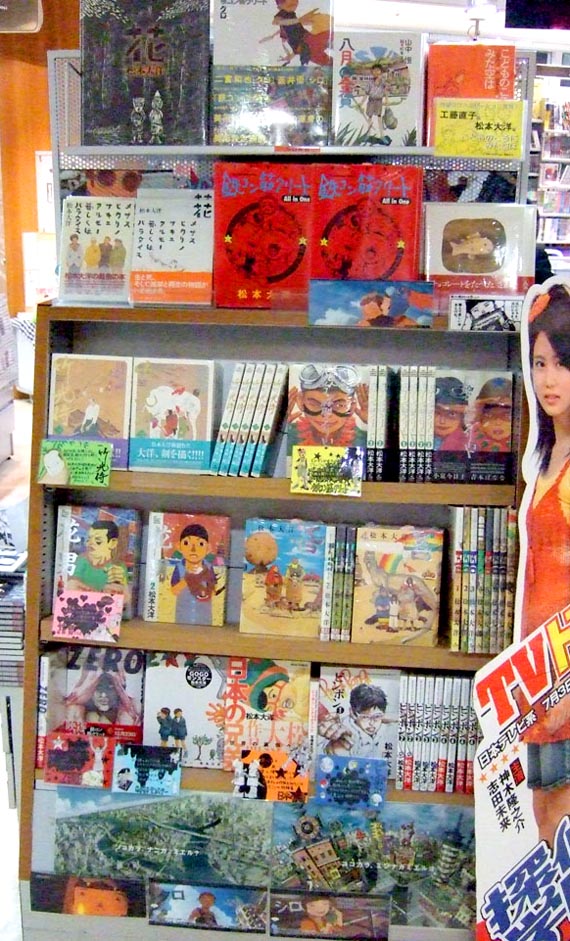
Japanese book display featuring the work of Taiyo Matsumoto. Photo by Christopher Butcher.
—
BIBLIOGRAPHY OF JAPANESE WORKS BY TAIYO MATSUMOTO
I’ve compiled as thorough a bibliography of Japanese language releases by Taiyo Matsumoto as one can without a thorough grasp of the Japanese language. I’ve also tried to find cover images for each entry, and made specific note of if and where these books are available in English, by hook… or by crook. I should also note that Matsumoto has begun illustrating book covers and interiors for various prose stories, and a search of his name on Amazon Japan will bring up 3-5 books not listed below. In general, he has just provided cover illustrations for these work, and so I haven’t included them here (they’re real pretty though…).

STRAIGHT Volume 1
Publisher: Kodansha, January 1989
English Availability: No
420 yen
STRAIGHT Volume 2
Publisher: Kondansha, December 1989
English Availability: No
430 Yen
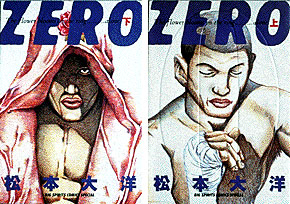
ZERO Volume 1 (New Edition)
Publisher: Shogakukan, May 1991 (Reissued September 95)
ISBN-13: 978-4091847355
English Availability: No
900 Yen
Zero Volume 2 (New Edition)
Publisher: Shogakukan, August 1991 (Reissued September 95)
ISBN-13: 978-4091847348
English Availability: No
900 Yen
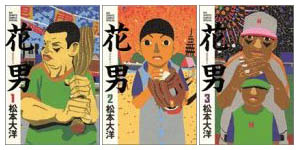
Hana Otoko (A Boy Meet A Papa And Baseball) Volume 1
Publisher: Shogakukan, May 1992 (reissued October 1998)
ISBN-13: 978-4091857316
English Availability: Scanlations, http://www.mangascreener.com/
900 Yen
Hana Otoko (A Boy Meet A Papa And Baseball) Volume 2
Publisher: Shogakukan, August 1992 (reissued October 1998)
ISBN-13: 978-4091857323
English Availability: Scanlations, http://www.mangascreener.com/
900 Yen
Hana Otoko (A Boy Meet A Papa And Baseball) Volume 3
Publisher: Shogakukan, October 1992 (reissued October 1998)
ISBN-13: 978-4091857330
English Availability: Scanlations, http://www.mangascreener.com/
900 Yen
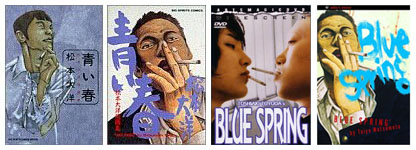
Blue Spring (Aoi Haru)
Publisher: Shogakukan, May 1993 (Reissued December 1998)
ISBN-13: 978-4091857347
English Availability: Print Edition, Viz, http://www.viz.com
English Availability: Film Adaptation, Artsmagic, http://www.artsmagicdvd.com/home/index.html
920 Yen
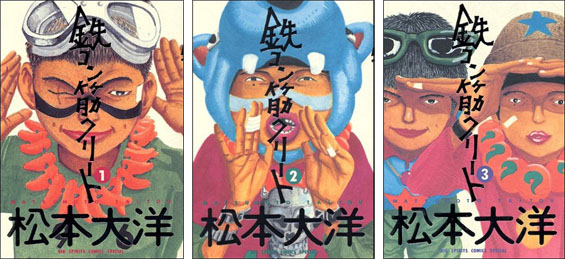
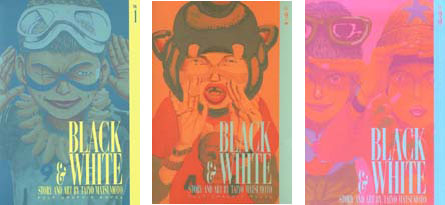
Tekkon Kinkreet Volume 1
Publisher: Shogakukan, March 1994
English Availability: Print Edition (as Black & White Volume 1), Viz, Out of Print
English Availability: Film Adaptation, Sony Pictures, http://www.sonypictures.com/homevideo/tekkonkinkreet/
850 Yen
Tekkon Kinkreet Volume 2
Publisher: Shogakukan, May 1994
ISBN-13: 978-4091847324
English Availability: Print Edition (as Black & White Volume 2), Viz, Out of Print
English Availability: Film Adaptation, Sony Pictures, http://www.sonypictures.com/homevideo/tekkonkinkreet/
850 Yen
Tekkon Kinkreet Volume 3
Publisher: Shogakukan, July 1994
ISBN-13: 978-4091847331
English Availability: Print Edition (as Black & White Volume 3), Viz, Out of Print
English Availability: Film Adaptation, Sony Pictures, http://www.sonypictures.com/homevideo/tekkonkinkreet/
850 Yen
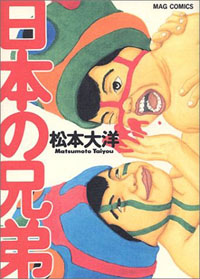
Brothers of Japan (Nippon No Kyoudai)
Publisher: Magazine House, October 1995
Hardcover
ISBN-13: 978-4838707508
English Availability: No
1,100 Yen
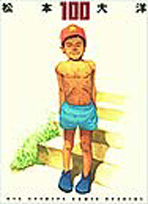
100
Publisher: Shogakukan, November 1995
100 Pages, Artbook, Hardcover, Oversized, Full Colour
ISBN-13: 978-4091997210
English Availability: No
2,500 Yen
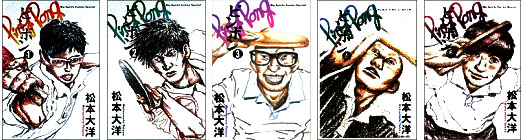
Ping Pong Volume 1
Publisher: Shogakukan, June 1996
ISBN-13: 978-4091847362
English Availability: Scanlations, http://www.kefi.org/
English Availability: Film Adaptation, Viz, http://www.pingpong-movie.net/
900 Yen
Ping Pong Volume 2
Publisher: Shogakukan, November 1996
ISBN-13: 978-4091847379
English Availability: Scanlations, http://www.kefi.org/
English Availability: Film Adaptation, Viz, http://www.pingpong-movie.net/
900 Yen
Ping Pong Volume 3
Publisher: Shogakukan, February 1997
ISBN-13: 978-4091847386
English Availability: Scanlations, http://www.kefi.org/
English Availability: Film Adaptation, Viz, http://www.pingpong-movie.net/
900 Yen
Ping Pong Volume 4
Publisher: Shogakukan, June 1997
ISBN-13: 978-4091847393
English Availability: Scanlations, http://www.kefi.org/
English Availability: Film Adaptation, Viz, http://www.pingpong-movie.net/
900 Yen
Ping Pong Volume 5
Publisher: Shogakukan, August 1997
ISBN-13: 978-4091847409
English Availability: Scanlations, http://www.kefi.org/
English Availability: Film Adaptation, Viz, http://www.pingpong-movie.net/
900 Yen
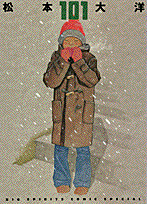
101
Publisher: Shogakukan, May 1999
100 Pages, Artbook, Oversized, Hardcover, Full Colour
ISBN-13: 978-4091847324
English Availability: No
2,500 Yen

Mezasu hikari no aru saki or Mono, moshikuha, paradise
Publisher: Freestyle, May 2000
165 Pages, Hardcover, Text only (play)
ISBN-13: 978-4939138010
English Availability: No
About: This play was written by Taiyo Matsumoto to be performed in black tent.
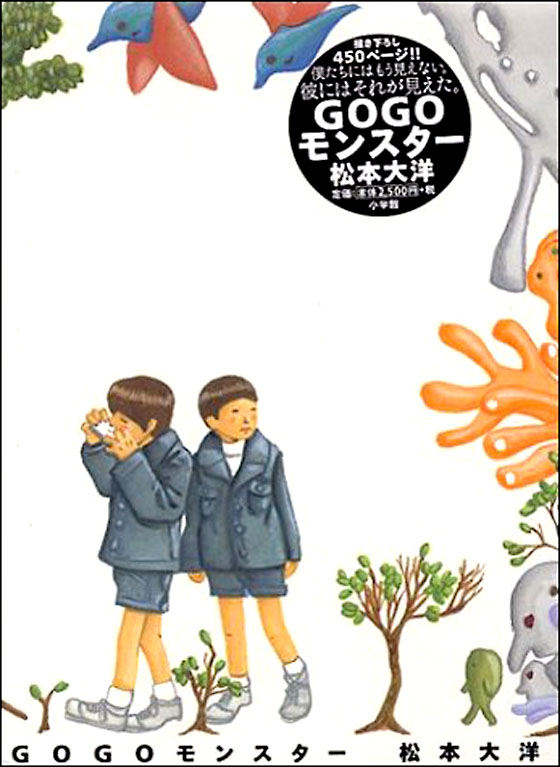
GOGO MONSTER
Publisher: Shogakukan, November 2000
455 Pages, Hardcover, Slipcase
ISBN-13: 978-4091793416
English Availability: No
2,625 Yen
Edit: In February 2009 Viz Media announced that they would be doing an all-in-one edition of GO GO MONSTER, to be released November 2009 for $24.95. Format is unkown at time of posting.
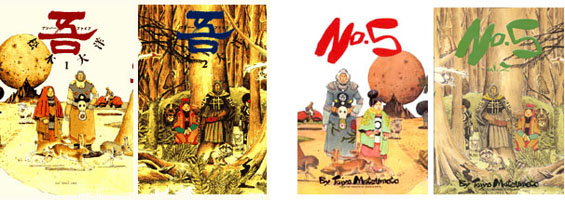
No. 5 Volume 1
Publisher: Shogakukan, November 2001
146 Pages, Oversized
ISBN-13: 978-4091882011
English Availability: Print Edition, Viz, Out of Print
860 Yen
No. 5 Volume 2
Publisher: Shogakukan, May 2002
138 Pages, Oversized
ISBN-13: 978-4091882028
English Availability: Print Edition, Viz, Out of Print
860 Yen
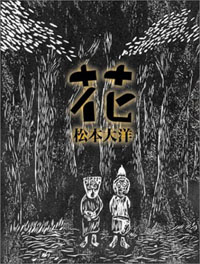
Hana
Publisher: Freestyle, December 2002
80 Pages, Oversized, Hardcover, Dust Jacket
ISBN-13: 978-4939138096
English Availability: No
1,680 Yen
ABOUT: Matsumoto created this script for a black tent theatre performance as a penciled comic story, and then revised it into a full length 80 page graphic novella.
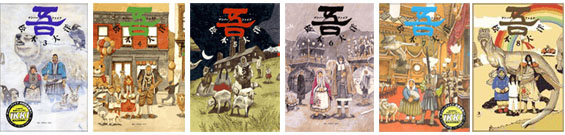
No. 5 Volume 3
Publisher: Shogakukan, March 2003
Oversized
ISBN-13: 978-4091882035
English Availability: No
860 Yen
No. 5 Volume 4
Publisher: Shogakukan, August 2003
128 Pages, Oversized
ISBN-13: 978-4091882042
English Availability: No
860 Yen
No. 5 Volume 5
Publisher: Shogakukan, January 2004
138 Pages, Oversized
ISBN-13: 978-4091882059
English Availability: No
860 Yen
No. 5 Volume 6
Publisher: Shogakukan, June 2004
134 Pages, Oversized, Dust Jacket
ISBN-13: 978-4091882066
English Availability: No
860 Yen
No. 5 Volume 7
Publisher: Shogakukan, November 2004
? Pages, Oversized, Dust Jacket
ISBN-13: 978-4091882073
English Availability: No
860 Yen
No. 5 Volume 8
Publisher: Shogakukan, February 2005
? Pages, Oversized
ISBN-13: 978-4091882080
English Availability: No
860 Yen
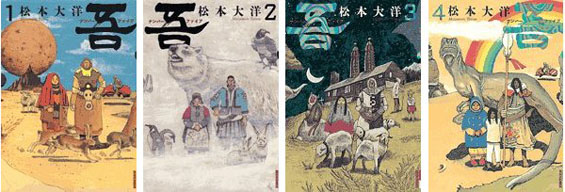
No. 5 Omnibus Edition Volume 1
Publisher: Shogakukan, November 2005
Collects Volumes 1 & 2 of the original edition
ISBN-13: 978-4091886118
English Availability: No
1,100 Yen
No. 5 Omnibus Edition Volume 2
Publisher: Shogakukan, November 2005
Collects Volumes 3 & 4 of the original edition
ISBN-13: 978-4091886125
English Availability: No
1,000 Yen
No. 5 Omnibus Edition Volume 3
Publisher: Shogakukan, December 2005
Collects volumes 5 and 6 of the original series
ISBN-13: 978-4091883049
English Availability: No
1,000 Yen
No. 5 Omnibus Edition Volume 4
Publisher, Shogakukan, December 2005
Collects volumes 7 and 8 of the original series
ISBN-13: 978-4091857323
English Availability: No
1,100 Yen
Tekkon Kinkreet All-In-One Edition
Publisher: Shogakukan, December 2006
611 Pages, Oversized, Dust Jacket
ISBN-13: 978-4091810335
English Availability: Print Edition, Viz, http://www.viz.com
English Availability: Film Adaptation, Sony Pictures, http://www.sonypictures.com/homevideo/tekkonkinkreet/
1,600 Yen
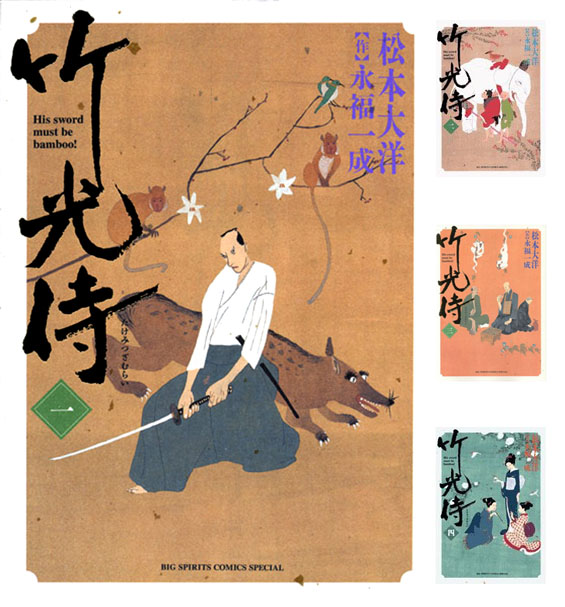
Takemitsu Zamurai Volume 1
Publisher: Shogakukan, December 2006
ISBN-13: 978-4091810342
English Availability: No
900 Yen
Takemitsu Zamurai Volume 2
Publisher: Shogakukan, May 2007
ISBN-13: 978-4091813206
English Availability: No
900 Yen
Takemitsu Zamurai Volume 3
Publisher: Shogakukan, October 2007
ISBN-13: 978-4091815880
English Availability: No
900 Yen
Takemitsu Zamurai Volume 4
Publisher: Shogakukan, March 2008
ISBN-13: 978-4091818485
English Availability: No
900 Yen
—
Thanks to Abhay Khosla for looking this over and for the kind words of support. And if you’re Kansai Takita, thank you very much for conducting this interview in the first place. I’m sharing it here in the same spirit that you originally conducted and posted it; so that people will read good manga. That said, it’s quite clearly your work, so feel free to tell me to take it down if it isn’t to your liking.
Thanks for reading,
– Christopher