


I was at Book Expo Canada a few weeks back and I intimated to a colleague that, for the first time in years, I couldn’t really “see” the shape of the manga market anymore. I had a pretty good handle on it up until the Kodansha rumours and Tokyopop flailing kicked in, but with companies leaving the market, with the Borders bankruptcy, with big reshuffles, with the Viz original content program, I guess I just lost track of it all. So I’m going to take 30 minutes and try and talk my way through it here… I’ve got until 1:00pm EST to finish this blog post. Let’s see what happens.
I guess first and foremost, the thing that bothers me about the Borders bankruptcy is that I honestly can’t believe how insular the book market is. It’s been rumoured for a number of years that if Borders, particularly when Kurt Hassler was the graphic novel buyer, didn’t want a book then the book didn’t get licensed (let alone published). At least so far as manga went, anyway. So when Borders dumped a ton of returns on pubs a few months ago and cut way, way back on their buying (to say nothing of the generally stingy purchasing habits of Hasslers’ replacements at Borders before the bankruptcy worries surfaced) suddenly titles, whole publishing lines, became unviable. Isn’t that nuts? There are still independent bookstores, another chain, and the rest of North America, but so much of the manga business was consolidated with one retailer (and one buyer) that these changes sent a major ripple throughout the industry.
 If I were a publisher, I’d be looking at my options. I’ve thought for a while that the graphic novel market in general, and manga in particular, has outgrown the “graphic novel section” of the bookstore. While about 80% of the manga being published could go to the same audience of 13-18 year olds (and those who read books for 13-18 year olds) there are a good number of books–and customers–who are likely tired of stepping over teenagers sprawled on the floor in the manga section. I think publishers working to develop newer and more diverse sections in bookstores is more important than ever, and there’s already been some headway made in developing separately stocked–and separately purchased–graphic novel sections in the children’s areas. Walk into most chain bookstores and you’re much more likely to find Pokemon: Diamond and Pearl Adventures Volume 1 across the aisle from the picture books rather than next to Naruto (although in an ideal world it might be cross-racked). Now, and here’s the trick, we need a grown-up graphic novel section, not only for the excellent (and future) D+Q, Picturebox, and Last Gasp offerings but so that the only difference between Battle Royale and Boys over Flowers isn’t some easily removed shrink-wrap. The industry is getting younger–the buzz words at the New York Comic Con were COMICS and FOR and KIDS–but it’s also getting older too, and older customers would like a different shopping experience than trying to find the latest Tatsumi or Inoue manga jammed in-between Ultimate Spider-Man and Naruto whilst simultaneously trying to avoid the outstretched gangly limbs of sullen teens thoroughly immersed in the Universe of the Four Gods.
It’s a little bit like why I think the pleas for more josei and more seinen are misguided; there’s no market for these books. There isn’t even an effective delivery system for them, they aren’t even designed for their target audience. The audience for the books isn’t going to find them in the manga section, and the books don’t look like something that they’d like in the first place because they adhere so strongly to manga packaging conventions (likely in a bid to capture the existing market) that even if you put a josei title next to the women’s fiction (read: chick lit) most women would look at it like some child/freak/pervert dropped it on the wrong table. Sure, you can do your buying online, but then you’re not a casual buyer, you’re not growing the audience, you’re selling to the initiated. That’s the situation we have right now, and that’s why there are so few books. Things are changing… I think Viz’s Seinen manga line is going to be interesting, I think Aurora has a lot of potential, but right now there’s almost no difference in the look or packaging of kids, teen, and adult manga, and if that isn’t crippling potential sales I don’t know what is.
Well, it’s 1pm. Time for me to get back to work. This is one of those posts that friends in the industry admonish me about, that I’m giving away secrets when I should be charging big bucks for this sort of advice. C’est la vie, sometimes you just gotta blog. But if you are a publisher who has found this useful then I demand free drinks in San Diego and to be put on your comp list. Send it care of The Beguiling.
I’ll be writing a part two at some point in the next day or two.
– Christopher
 I was in New York a few months ago for the official opening of Kinokuniya’s new store opposite Bryant Park. The guest of honour was one Takehiko Inoue, author of the manga Vagabond, Slam Dunk, and REAL. Imagine my surprise when I showed up at the event and the complete run of
 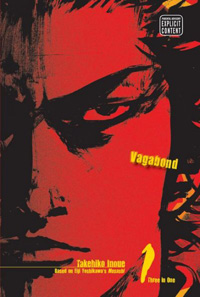 Meanwhile, none of this will really matter in a few months when the (awesome) VAGABOND: VIZBIG EDITION comes out, as it’ll collect the first three volumes of Vagabond for a paltry $19.99, and since Diamond has already solicited it, this edition should be available for a little while (one hopes). But I did want to illustrate the lengths that some comic shops go to get product in, to stay competitive, and to make sure the good books are represented on the racks… even if it takes us a little while to figure it out.
 Over at The Comics Reporter, Tom Spurgeon’s “Five For Friday” feature solicits reader reaction on a specific theme, like your five favourite superheroes, five important moments in comics, or this past Friday’s “
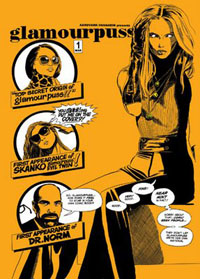 I hesitate to draw any major conclusions about this from such a limited sample pool… I do think that choosing a major reprint project is risky for any publisher, because every fan has their own particular favourites, and fans find different value in different projects. For example, despite everything he has done to turn me off of his work, Dave Sim is single-handedly responsible for making me want to dig deeper into the work of Al Williamson thanks to Glamourpuss #1 a few weeks back. It’s an oddball project, for sure, but if you can divorce Dave Sim the person from Dave Sim the guy who created a pretty solid comic book talking about the history of illustration and illustrators, it’s a good read. If not, please promise me at least to not wreck the copies I’ve got on the rack.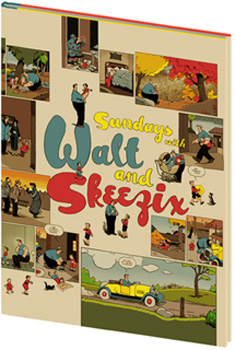
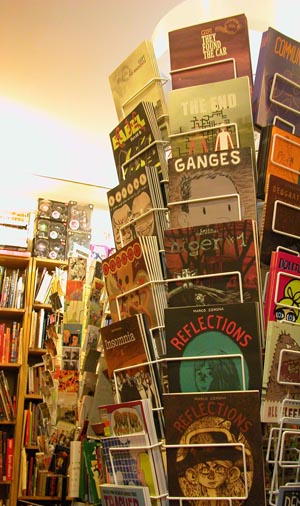 Although he was under no obligation to do so, Tom Spurgeon didn’t post the full text of my response to the news that Fantagraphics has signed an exclusive deal with Diamond… It’s a little more balanced and nuanced then what ended up in the CR piece, in my always-humble opinion, so I figured I’d post it here.

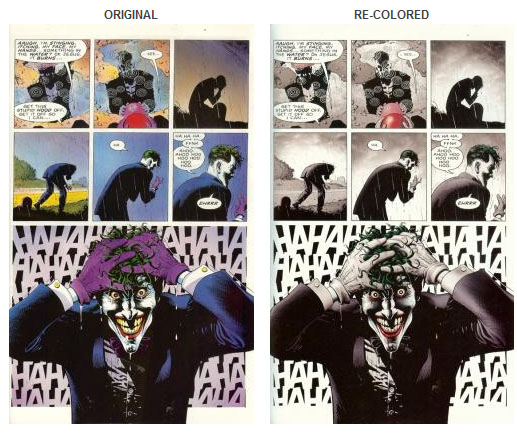
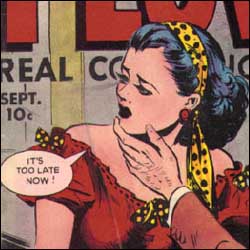 I found myself needing to write a short history of comics in North America recently, and found the website
  Customer interaction 1 minute ago.